Lanzarote offers very different ways to enjoy the coast. Its urban beaches are easy to reach and usually have services nearby, while its smaller coves and natural pools offer a wilder setting with fewer facilities and more variable sea conditions.
This guide will help you compare both options and choose the type of coastal stop that best suits your plans, mobility and experience in the sea.
Jump to
Urban beaches in Lanzarote: calm swimming close to local life
Urban beaches are the easiest option if you want straightforward access, services nearby and the possibility of combining time by the sea with restaurants, shops or a walk along the promenade.
Facilities and accessibility vary between beaches, so check the information for each area before choosing where to spend the day.
Reducto beach in Arrecife
Playa del Reducto is the easiest beach to combine with a visit to Arrecife. It sits beside the seafront promenade, within walking distance of the city centre, cafés and restaurants.
The water is usually calm, but the beach changes noticeably with the tide. At low tide, the reef and volcanic stones become more visible. Mid or high tide is generally a better choice if swimming is your priority.
You do not need to plan a full beach day here. Spend some time by the sea, then continue along the coast towards the historic centre and Charco de San Ginés. This is a practical option when you want to combine the beach with a slower visit to Lanzarote’s capital.
Check the beach flags and any current municipal notices before entering the water, as bathing conditions can change.
Beaches in Puerto Del Carmen
Puerto del Carmen has several urban beaches connected by the seafront promenade. Restaurants, shops and everyday services are always close, but each beach offers a slightly different experience.
Playa Chica
Playa Chica is a small, sheltered bay close to the old harbour. Its protected setting makes it popular for swimming, snorkelling and diving. Because the beach is small, it can fill up quickly, especially during the middle of the day.
Choose it for a short swim or time in the water rather than for a quiet day with plenty of space.
Playa Grande
Playa Grande is the most central and busiest beach in Puerto del Carmen. It is easy to reach and has the widest choice of restaurants, shops and services nearby.
It works well when convenience matters more than finding a secluded setting. Arrive earlier in the morning for a calmer walk along the promenade and an easier choice of space on the sand.
Los Pocillos
Los Pocillos is wider and more open than Playa Grande. Its long stretch of sand gives you more room, although the area can feel windier because the beach is less sheltered.
It is a practical option for a longer beach day, particularly if you are staying nearby and prefer not to drive elsewhere.
Matagorda
Matagorda is at the eastern end of Puerto del Carmen. It has a more relaxed atmosphere than the central part of the resort, with the promenade, restaurants and services still close at hand.
Choose it when you want an easy beach day without moving far from your accommodation.
The four main beaches have adapted access features. For details about ramps, walkways, shaded areas and assisted bathing, read Accessible Lanzarote guide.
Urban beaches in Playa Blanca
Playa Blanca has three main urban beaches: the small beach in the centre, Playa Dorada and Playa Flamingo. All are easy to combine with a walk, lunch or time around the resort, without needing to organise a separate coastal excursion.
Playa de Playa Blanca
The town beach is the smallest and most central option. It is useful for a short swim while exploring Playa Blanca on foot, but its size means that it can become busy quickly. Choose it for convenience rather than for a full day on the sand. Restaurants and the promenade are only a few steps away.
Playa Dorada
Playa Dorada is larger and has more services. The bay is protected by breakwaters, so the water is generally calmer than on more exposed parts of the coast. Restaurants, sunbeds and water activities are available nearby. It is a good choice when you want an easy, organised beach day. It is also one of the most popular beaches in Playa Blanca, so do not expect a quiet setting during busy periods.
Playa Flamingo
Playa Flamingo lies on the western side of Playa Blanca. Its sheltered water and compact size make it a practical option for families and relaxed swimming. The promenade, restaurants and services are close to the beach.
It can also become busy, particularly around midday. Visit earlier or later in the day when you prefer a slower atmosphere.
Choose the town beach for a brief central stop, Playa Dorada for more services and activities, or Playa Flamingo for a sheltered swim. There is no need to visit all three: pick the one that best fits where you are staying and the kind of day you want.
Before swimming, always check the beach flags and any current notices from the local authority.
Wild coves and natural pools in Lanzarote
Away from the main tourist areas, Lanzarote’s coast feels less developed and more exposed. These beaches and coves usually have fewer services, more uneven access and sea conditions that can change quickly.
Choose them when you want to spend time in the landscape, not simply because you are looking for somewhere to swim. Bring water, sun protection and suitable footwear, and always check the sea before entering.
Barranco del Quiquere
Barranco del Quiquere is a small rocky cove on the coast between Puerto del Carmen and Puerto Calero. There is no sandy beach, no lifeguard and no beach service, so it offers a very different experience from the urban beaches nearby.
You can reach the area as part of the coastal walk from the old harbour towards Puerto Calero. The distance and walking time depend on your starting point, and the route crosses open volcanic terrain with little shade. The cove may be suitable for swimming when the sea is calm, but access to the water is over rock. Wear suitable footwear and do not enter if waves are reaching the shore. You can continue walking to Puerto Calero for lunch or return to Puerto del Carmen along the same coastal route.
Papagayo beaches
Papagayo is not a single beach but a group of beaches and coves inside the protected landscape of Los Ajaches. They include Playa Mujeres, Playa del Pozo, Playa de la Cera, Playa de Papagayo, Caleta del Congrio and Puerto Muelas.
Playa Mujeres is one of the largest and easiest options if you want more room. Playa de Papagayo is the best known and can become busy. The smaller coves offer a more natural setting, but they are not guaranteed to be quiet, particularly during holidays and summer.
Access by car is along unpaved tracks, whose condition can vary. You can also walk between several beaches, but the paths are exposed, uneven and have very little shade. Choose one main beach rather than trying to see them all, and carry enough water and sun protection for the time you plan to stay.
Services are limited and you should not assume that lifeguards will be present. Follow the marked access routes, take all your rubbish with you and avoid walking outside the established paths. This is a protected landscape, not simply a group of beaches beside Playa Blanca.
Playa Famara
Famara is a long, open beach beneath the cliffs in the northwest of Lanzarote. It is an excellent place for walking, watching surfers and experiencing one of the island’s broadest coastal landscapes.
It should not be treated as a reliable swimming beach. Wind, waves and currents are common, and the conditions can vary considerably along the shore. Check the flags, follow the lifeguards’ instructions and stay out of the water when swimming is not recommended.
You do not need to plan your visit around sunset. Famara is also worth visiting in the morning or on a cloudy day, when the beach is often better suited to a long walk. Afterwards, continue to Caleta de Famara for lunch or a short walk through the village.
Caletón Blanco
Caletón Blanco lies on the northern coast, close to Órzola. White sand gathers between old lava formations, creating shallow areas that change in size and depth with the tide.
It can be a good option for spending time beside the water when the sea is calm, but the experience will look very different depending on the tide. Some areas become extremely shallow, while volcanic rocks remain exposed around the sand.
There is parking, but services are limited. Bring water, sun protection and suitable footwear for walking over the rocky sections. Before swimming, check the wind and sea conditions rather than assuming the natural lagoons will always be sheltered.
Caletón Blanco is easy to include in a day in northern Lanzarote, together with Órzola, Haría or one of the cultural attractions in the area.

Natural pools
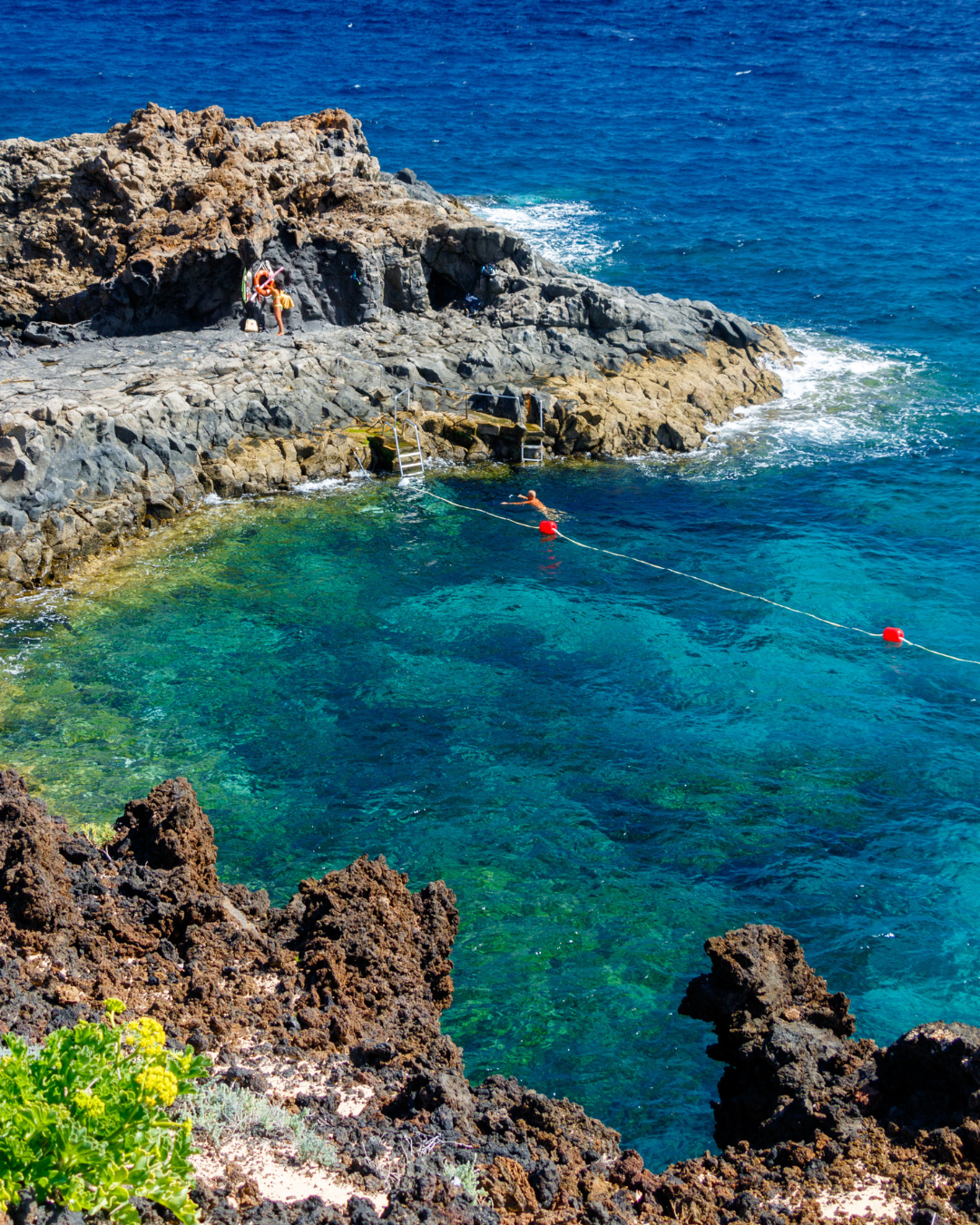
Natural pools can offer a very different experience from a conventional beach, but they are not all equally easy or safe to use. Some are integrated into coastal villages and have steps into the water. Others are remote, exposed to the Atlantic and difficult to reach.
Always check the tide, wind and sea conditions before entering. A pool may look protected while waves are still reaching it from the open coast.
Punta Mujeres
The natural pools of Punta Mujeres offer a more accessible way to enjoy the volcanic coastline. They are spread along the village seafront, and some have metal steps that make it easier to enter and leave the water.
The pools are not all the same. Some are more enclosed and sheltered, while others remain exposed to waves and share the coast with small fishing boats. Walk along the seafront before choosing where to stop, and check the conditions at each pool rather than assuming they will all be calm.
Punta Mujeres works well as part of a relaxed day in northern Lanzarote. You can combine your swim with a walk through the village and a nearby stop in Arrieta or Haría, without trying to include too many places in the same day.

Los charcones
Los Charcones is a remote stretch of volcanic coast west of Playa Blanca. The pools form naturally between the rocks and change considerably with the tide, but this should not be treated as an easy or reliable swimming place.
Access is uneven, there are no lifeguards or beach services, and waves can enter the pools unexpectedly. Wear suitable footwear and keep away from the water when the sea is rough, the tide is rising or conditions are unclear.
I recommend visiting Los Charcones primarily for its coastal landscape. Only consider entering the water when the sea is completely calm and you are confident about the conditions. If you do not know the area, enjoy the views from a safe distance rather than planning your visit around swimming.

Before swimming: safety and sea conditions
Lanzarote is not only an island of dramatic volcanic landscapes. It is also a place of small coves, natural pools and beaches where time seems to move more slowly.
Very often, the most special places are not necessarily the most famous ones, but the ones you discover without rushing — walking slowly, listening to the ocean and observing how the coastline changes with the light, the wind and the tides.
Beyond swimming itself, exploring these beaches and natural pools is also a way of understanding Lanzarote’s connection with the sea. Some are located beside quiet coastal villages; others appear between ancient lava flows or at the end of a seaside path. All of them invite you to experience the island through calm, authenticity and respect for the landscape.